
Welcome to AUSACE
The Arab-U.S. Association for Communication Educators
Established in 1995, AUSACE encourages and supports the advancement of professional relationships among Arab and U.S. university faculty and students and media professionals.
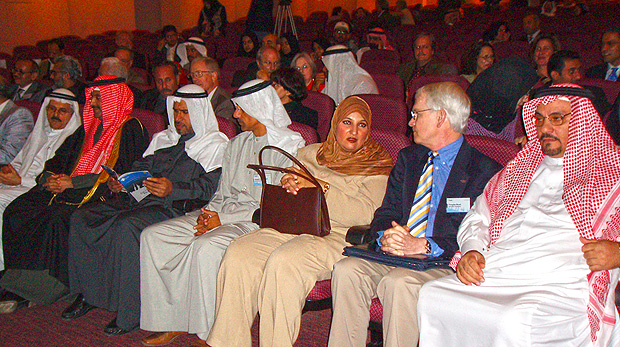
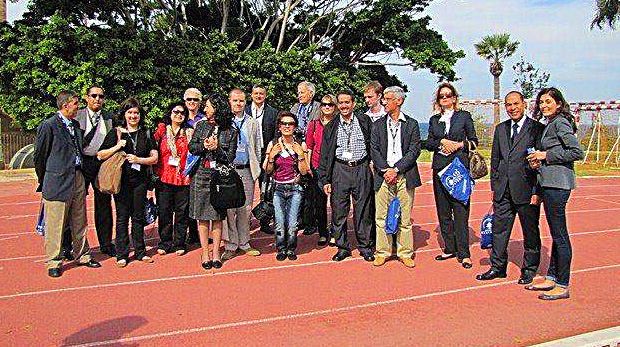
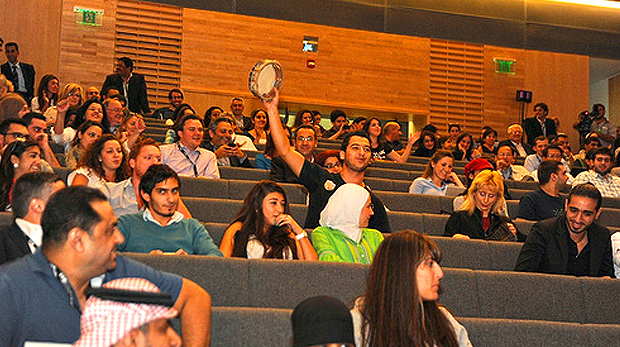
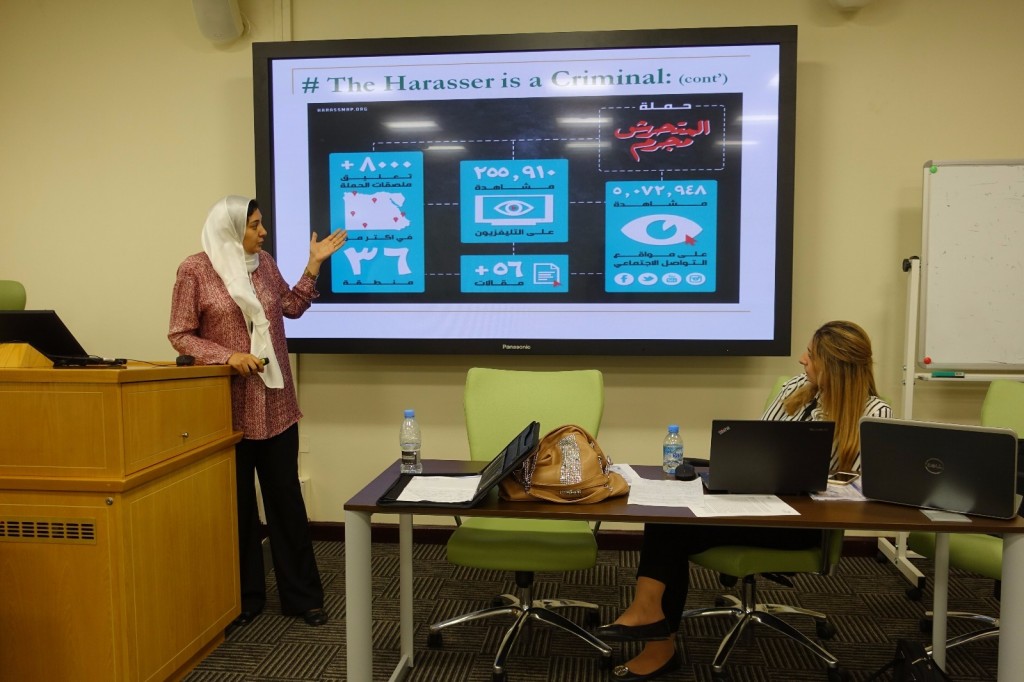
The Arab-U.S. Association for Communication Educators
Established in 1995, AUSACE encourages and supports the advancement of professional relationships among Arab and U.S. university faculty and students and media professionals.
From 4th to 6th November 2026
Institute of Press and Sciences of Information, Manouba University Campus , Tunisia
The “global village” has evolved into “a space saturated with complex and difficult interactions” (McLuhan, p.36), while “algorithms now constitute an essential element of our informational ecosystem” (Gillespie, 2014, p.167). These now appear as technological mechanisms that are “not neutral, but imbued with logics and biases” (Noble, 2018), imposing a new rationality on the media landscape and making us “increasingly subject to decisions made by opaque algorithms” (Pasquale, 2015, p.3) .
In the age of artificial intelligence, we have moved from a classical conception of globalization, based on “the cultural domination of the world by a limited number of powerful states” (Schiller, 1976, p.9), to a form of algorithmic domination and digital transformation. In other words, we are now living in an era of digital media globalization in which algorithms play a central role in organizing information flows, gradually removing control from media institutions—even as these institutions experience “degrees of uncertainty” (Rusbridger, 2018) .
Several media institutions initially believed that their presence on social media—through official pages on platforms such as Facebook or Instagram—would mitigate the technological disruption and bring audiences closer to journalistic content. However, they discovered that “the distribution of information is now controlled by platforms (and users), rather than by media institutions (broadcasters/publishers)” (Bell & Owen, 2017, p.7) .
Digital platforms are now redefining priorities and developing sophisticated strategies to capture the attention of “individuals formerly known as the audience” (Rosen, 2012). Data and algorithms thus become instruments of domination within what Shoshana Zuboff (2019, p.45) describes as “surveillance capitalism ”. Faced with the technological complexities generated by digital globalization, significant legal issues are emerging in the field of media and communication.
Indeed, “technology has evolved at a faster pace than legal systems, leading to a frantic race to develop appropriate regulatory frameworks” (LawShun, 2025).
Some scholars also emphasize that regulating artificial intelligence technologies represents a considerable challenge, requiring a careful balance between legal constraints and technological innovation. This context places media institutions before major challenges, particularly in the context of transnational journalism and global platforms, which are characterized by the absence of an international consensus on regulation. This results in issues related to intellectual property, information credibility, as well as the proliferation of misinformation, manipulated images, and AI-generated content.
Moreover, media globalization has fostered the emergence of what is often referred to as the “democratization of media in the digital age.” The new communication and technological environment offers unprecedented opportunities for broader participation and direct expression by users of digital platforms. However, this form of “digital democracy” imposes professional and technical challenges on media professionals, alongside economic threats and a reconfiguration of editorial responsibilities driven by artificial intelligence.
Ultimately, media globalization in the digital age highlights a fundamental paradox: while digital transformations have enhanced freedom of expression and rapid access to information, they have also generated greater complexity within the media ecosystem, where algorithmic power, legal fragility, and weak critical skills among audiences intertwine.
This situation calls for renewed reflection on media governance, particularly through the development of media and information literacy among younger generations, for whom technology and artificial intelligence have become essential sources of information production and circulation.
We are pleased to invite you to participate in the 30th edition of the AUSACE Conference, which will be held on 4 – 6 November 2026 at IPSI (Manouba University, Tunisia). Academics, researchers, and students are invited to submit proposals (in English, Arabic or French) related to the conference theme. Suggested topics include, but are not limited to:
1. Journalism and Algorithmic Power: Realities and Challenges
2. Law, Journalism and Regulatory Frameworks in the Era of Digital Globalization
3. Transnational Journalism in the Age of Digital Transformations
4. Social Impact of Media and Information Globalization
5. Impact of Artificial Intelligence on the Future of Journalism in the Global South
6. Media Democratization and the Dynamics of Digital Publishing and Online Dissemination
7. Globalization of Communication in the Digital Age: Opportunities and Challenges
Proposals may take the form of an abstract and/or a full paper.
Full papers must be between 6,000 and 8,000 words (excluding the title, page and references).
Abstracts must be between 150 and 300 words, accompanied by 5 keywords.
KEYDATES
August 1st, 2026 Submission deadline (abstracts/full papers)
September 30th, 2026 Email notification of acceptance :
Submissions must be sent in Word or PDF format.
Submissions should be sent according to the language of writing to: AUSACE-IPSI2026@ipsi.uma.tn
Contributions must follow APA style (7th edition) for formatting, citations, and references.
Please ensure that your submission includes the following information:
 Title of the paper
Full name of the author
Institutional affiliation
Current position
Postal address
Phone/WhatsApp number
Abstract or full paper
Registration Fees
Faculty Members: 120 USD
Students:60 USD

The 13th volume of the Journal of Middle East Media (JMEM) is now available online. Communication faculty and graduate students throughout Africa, the Middle East, Asia, Europe and the United States have submitted research papers for inclusion. The Journal of Middle East Media is a peer-reviewed, open-access journal sponsored by the Arab-U.S. Association for Communication Educators (AUSACE).
CALL FOR PAPERS for next issue:
JMEM Call for papers English 2026
JMEM Call for papers Arabic 2026
The Arab-U.S. Association of Communication Educators is an organization dedicated to the advancement of Arab-U.S. relations among communication educators and media professionals. Established in 1995, AUSACE is the longest-running organization of its kind and hosted its 20th annual international conference in Doha, Qatar in October 2015. AUSACE also publishes the Journal of Middle East Media, a peer-reviewed journal dedicated exclusively to communication research and media studies in the Middle East.